

The years between 7th and 10th
decide everything that comes after.
Most schools teach children to pass exams. CFAL's Foundation Programme teaches them to think — so that when JEE, NEET, and Olympiads arrive, they're not cramming. They're ready.
Book a Free Assessment →"My child is bright.
But are they getting enough
at their current school?"
If your child finishes homework in minutes. If they're bored in class. If they ask questions their teachers can't answer. If you sense there's more inside them than their school can draw out — you're not imagining it. You're recognising potential that needs a different kind of environment.
They started in Grade 6, 7, 8, 9. Look where they are now.
Every one of these students built their foundation at CFAL before competitive exams began. The pattern is clear: early depth creates later peaks.
A letter to parents who know their child deserves more
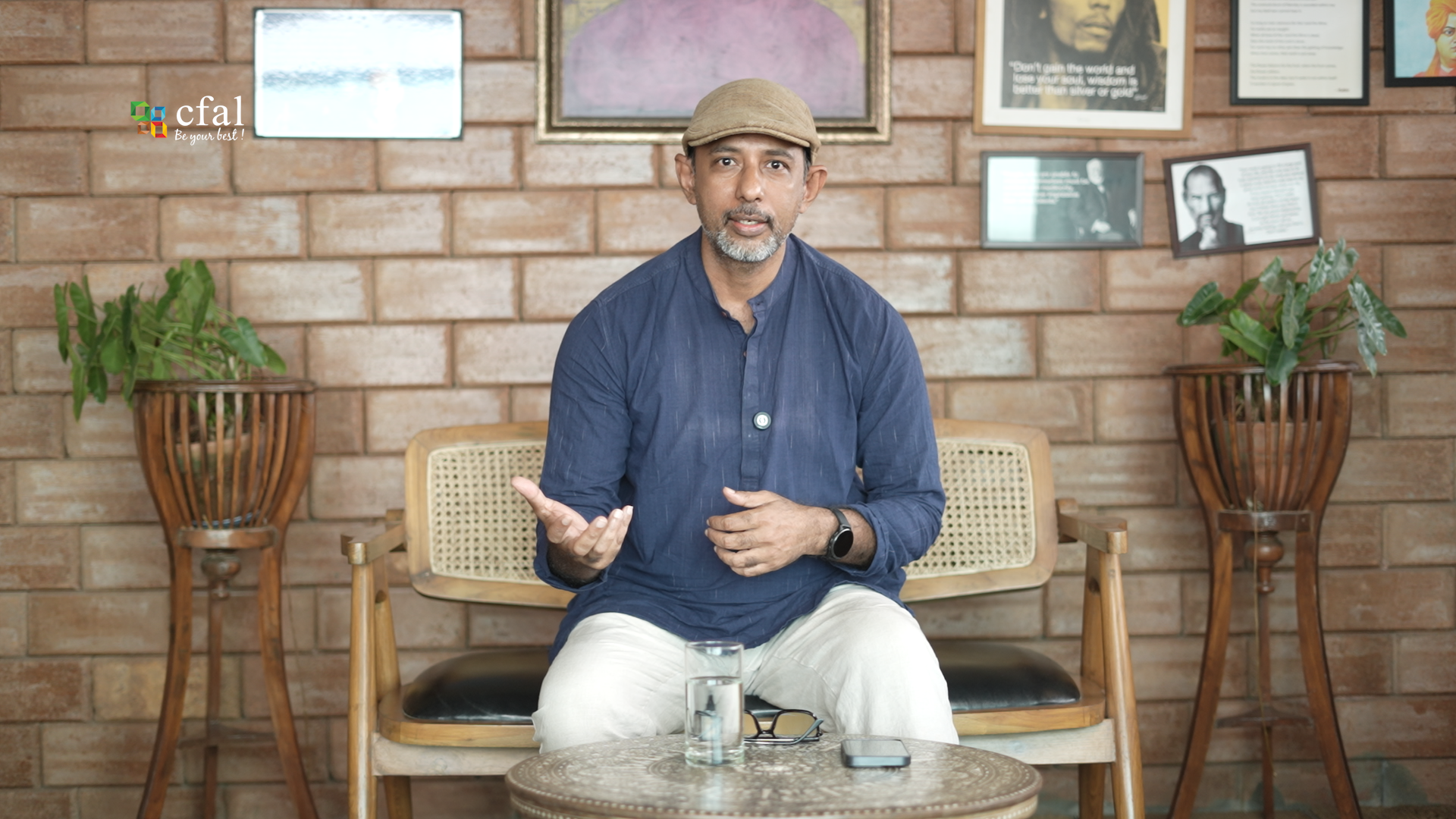
Dear parent,
I want to tell you something that most coaching centres won't say, because it doesn't sell: Grades 7 to 10 matter more than Grades 11 and 12.
By the time a student enters PU and begins JEE or NEET preparation, the window for building deep foundations is already closing. The students who struggle in competitive exams at 17 are almost always students who were taught to memorise at 13. The students who thrive — who score 99.9 percentile, who qualify for Olympiads, who reach IITs — almost always had something different happen between Grades 7 and 10.
At CFAL, the Foundation Programme is not "early coaching." We don't teach JEE syllabus to 8th graders. We teach them to think like scientists and mathematicians — through Nuffield experiments where they discover principles before being told them, through Berkeley Math Circles where they solve problems nobody has taught them, through Olympiad training where the questions have no formula.
The results — JEE, NEET, Olympiads — come later. And when they come, they're extraordinary. Not because we drilled the children earlier. But because we built the mind that every exam eventually tests.
If your child is curious, capable, and not being challenged enough — I'd love to meet them. Come visit us on a Saturday. Let them sit in a class. Let them try a Math Circle problem. You'll see the difference in their eyes within an hour.
They discover the principle before you name it.
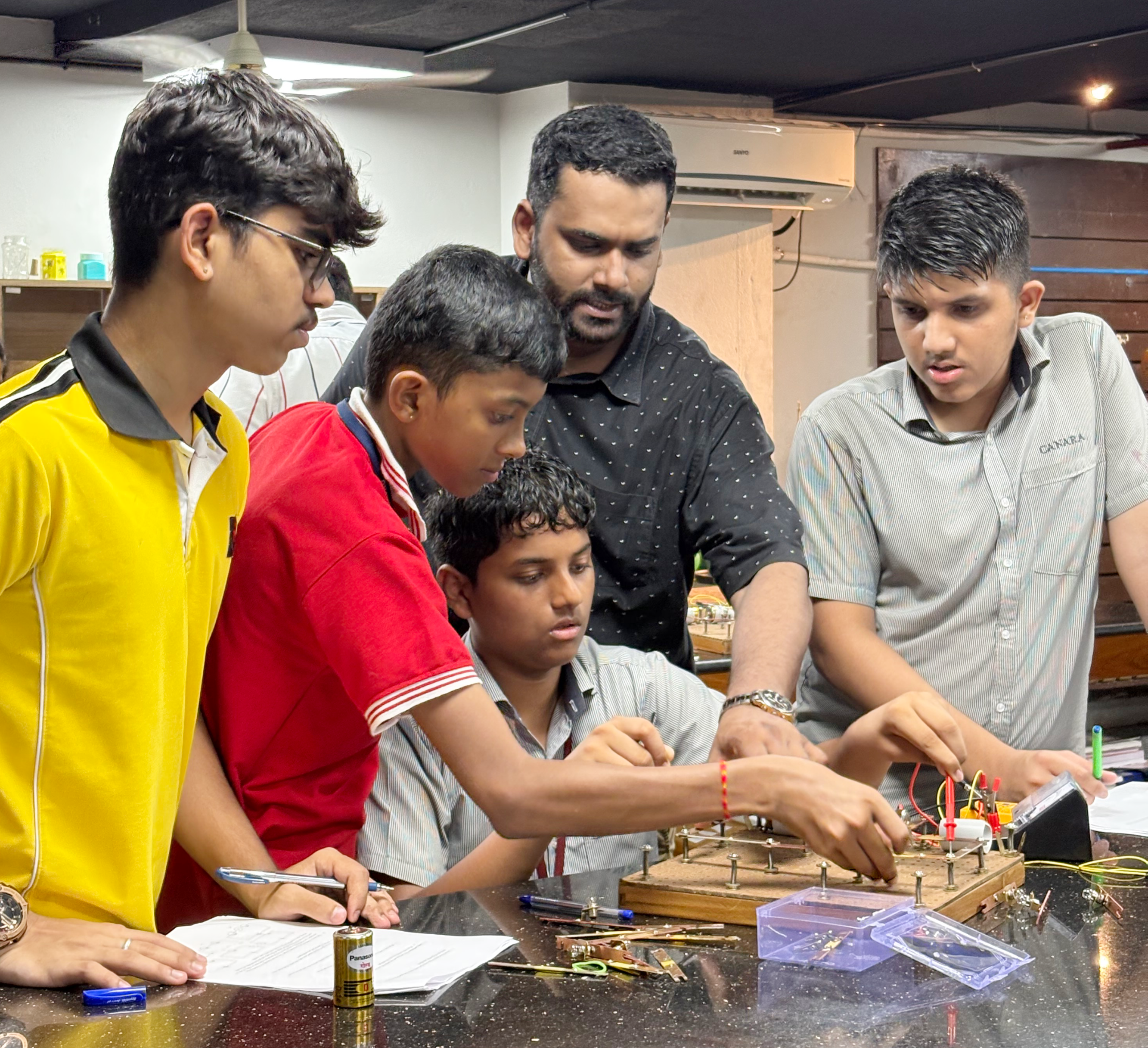
In most schools, children are told "F = ma" and asked to memorise it. In CFAL's Nuffield programme, children push objects of different masses, measure the results, and discover the relationship themselves. Then they learn it has a name.
This is experiment-driven science — developed by the Nuffield Foundation in the UK and implemented at CFAL under the guidance of Academic Advisor Mervin. Every concept in Physics, Chemistry, and Biology is experienced before it's explained.
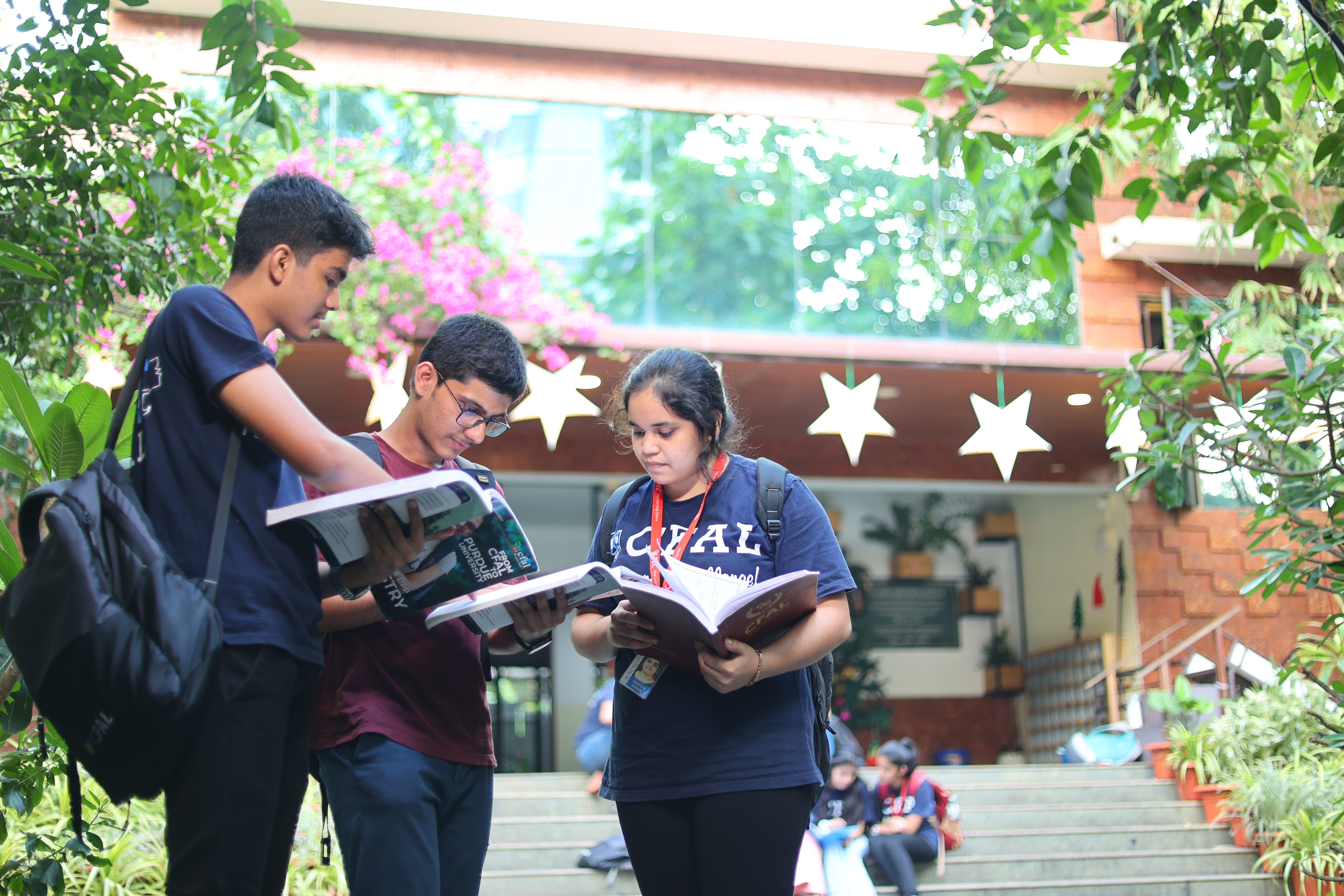
Where mathematics becomes something you love, not something you fear.
Most children arrive at CFAL believing math is about formulas and speed. Math Circles — modelled after the Berkeley programme — show them that mathematics is about patterns, beauty, and the thrill of solving something nobody has taught you to solve.
Prof. P N Subramanya and Dr. Srikanth Pai (adjunct professor of mathematics) lead these circles. These are the same mentors who guided Aditya Prakash to the International Mathematical Olympiad in Brazil.
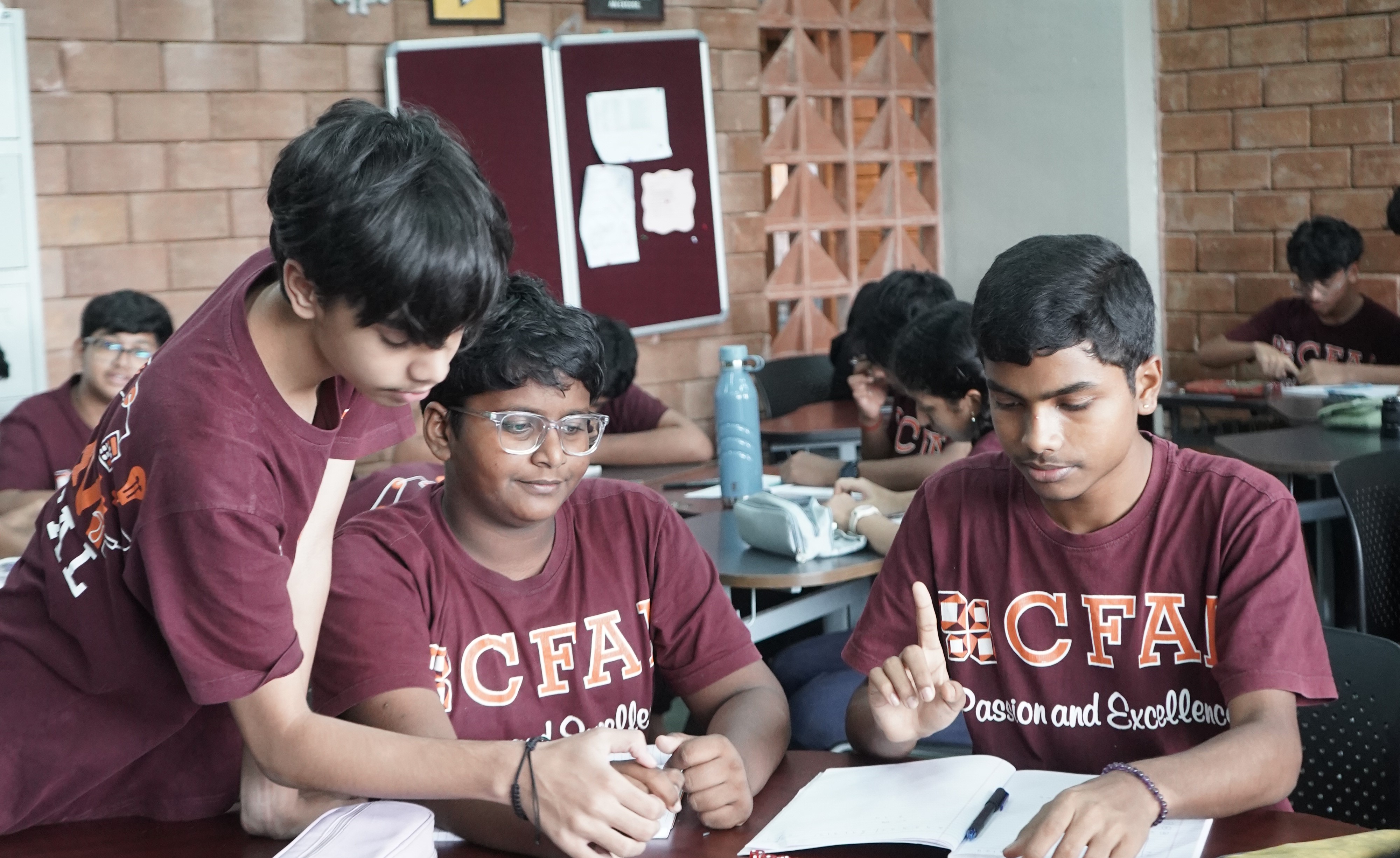
The students who start Olympiads early don't just win medals. They crack JEE differently.
CFAL introduces Olympiad-level thinking from Grade 7 — through IOQM, NMTC, AMC, and the Ramanujan Contest. Three dedicated Olympiad Camps per year build sustained problem-solving stamina. Foundation students compete alongside PU students — and hold their own.
In 2025, 3 of CFAL's 10 RMO qualifiers were Foundation Programme students. In 2026, all five of CFAL's top JEE Main scorers were also Science Olympiad National Top 1% achievers — and they all built their foundation here.
From Grade 7 to IIT. From Grade 8 to IISc. From Mangaluru to the world.
Foundation isn't a separate programme. It's the first chapter of a story that leads to the most extraordinary outcomes in India.
who were taught to think at 13."
This is not "early coaching." This is a different kind of education.
Parents sometimes ask: "Why not just keep my child in school and add tuition in Grade 11?" Here's what tuition cannot do.
School teaches answers. Foundation teaches questions.
In most schools, success means remembering what was taught. At CFAL, success means solving problems you've never seen. Nuffield experiments, Math Circles, and Olympiad training all build one skill: the ability to face the unknown and reason your way through. This is the skill that JEE, NEET, and life beyond college all test.
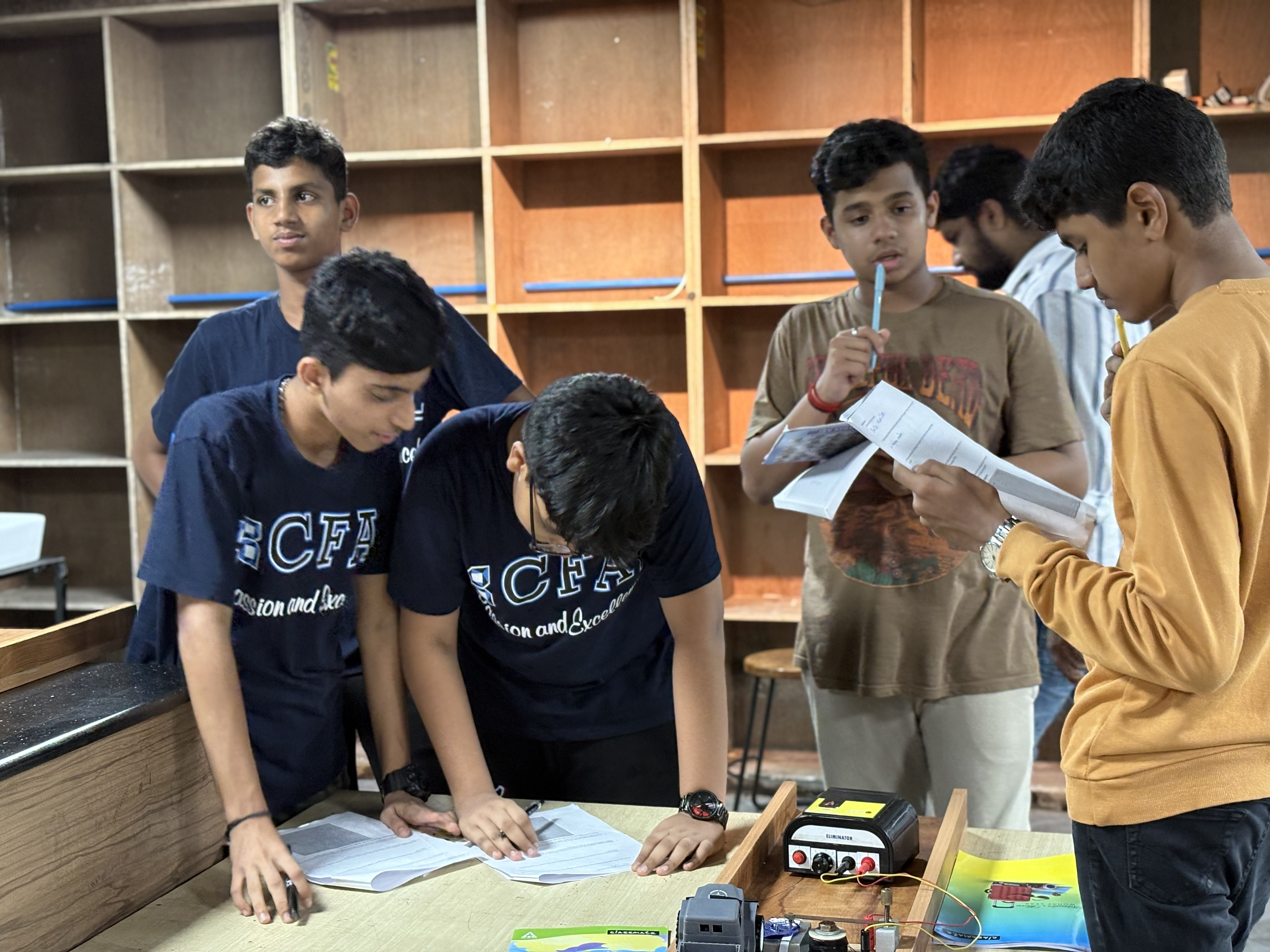
Your child has a name here. Not a roll number.
Foundation batches are intentionally small. Teachers know every child's strengths, struggles, and learning style. When a student is bored, they're challenged more. When they're struggling, they're supported immediately. This individual attention is impossible in a school of 2,000 — and it's impossible to retrofit at age 17.
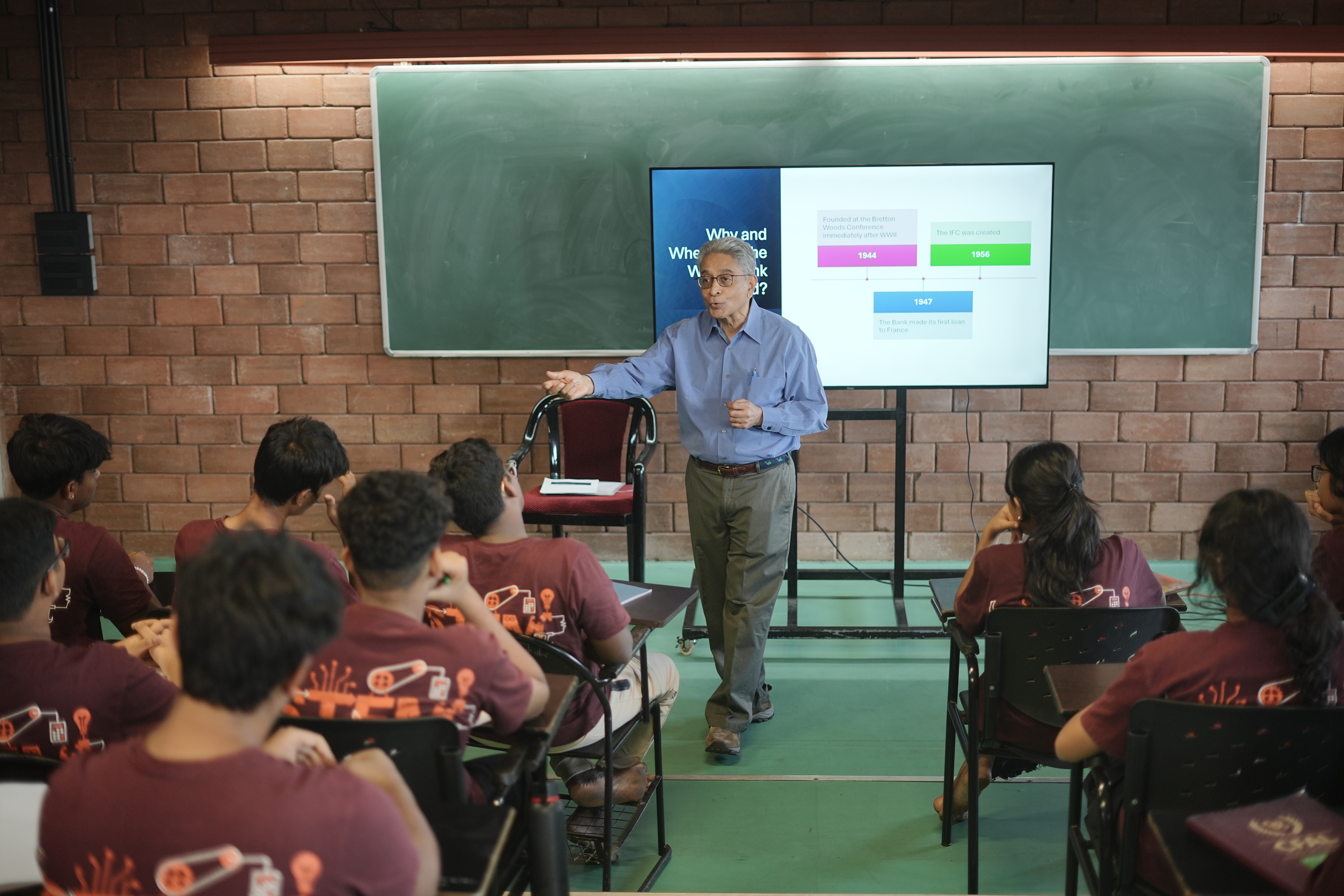
We benchmark against the best in the country. Not against the class average.
Foundation students take standardised tests calibrated to national competitive exam levels — not school exam levels. Test analysis identifies not just what a student got wrong, but why — and what conceptual gap needs closing. By Grade 10, your child already knows where they stand nationally. No surprises in Grade 12.
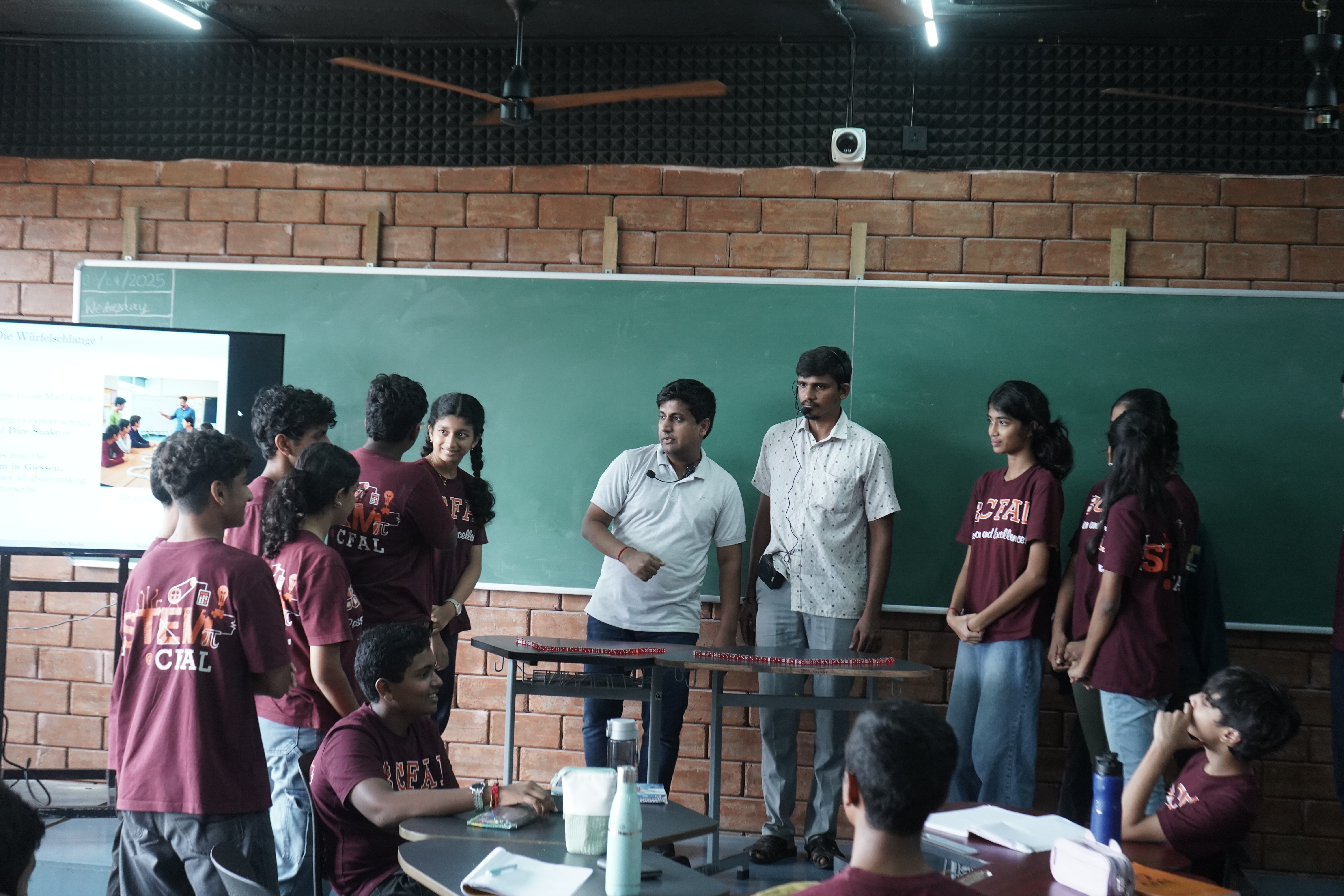
Your child's classmates are other curious, ambitious children.
Environment shapes ambition. In a typical school, a gifted child has few peers who match their curiosity. At CFAL, Foundation students are surrounded by other children who love solving problems, who participate in Olympiads, who aim for IITs and IISc. This peer effect — being around other bright, motivated students — is the single most underestimated factor in a child's development.
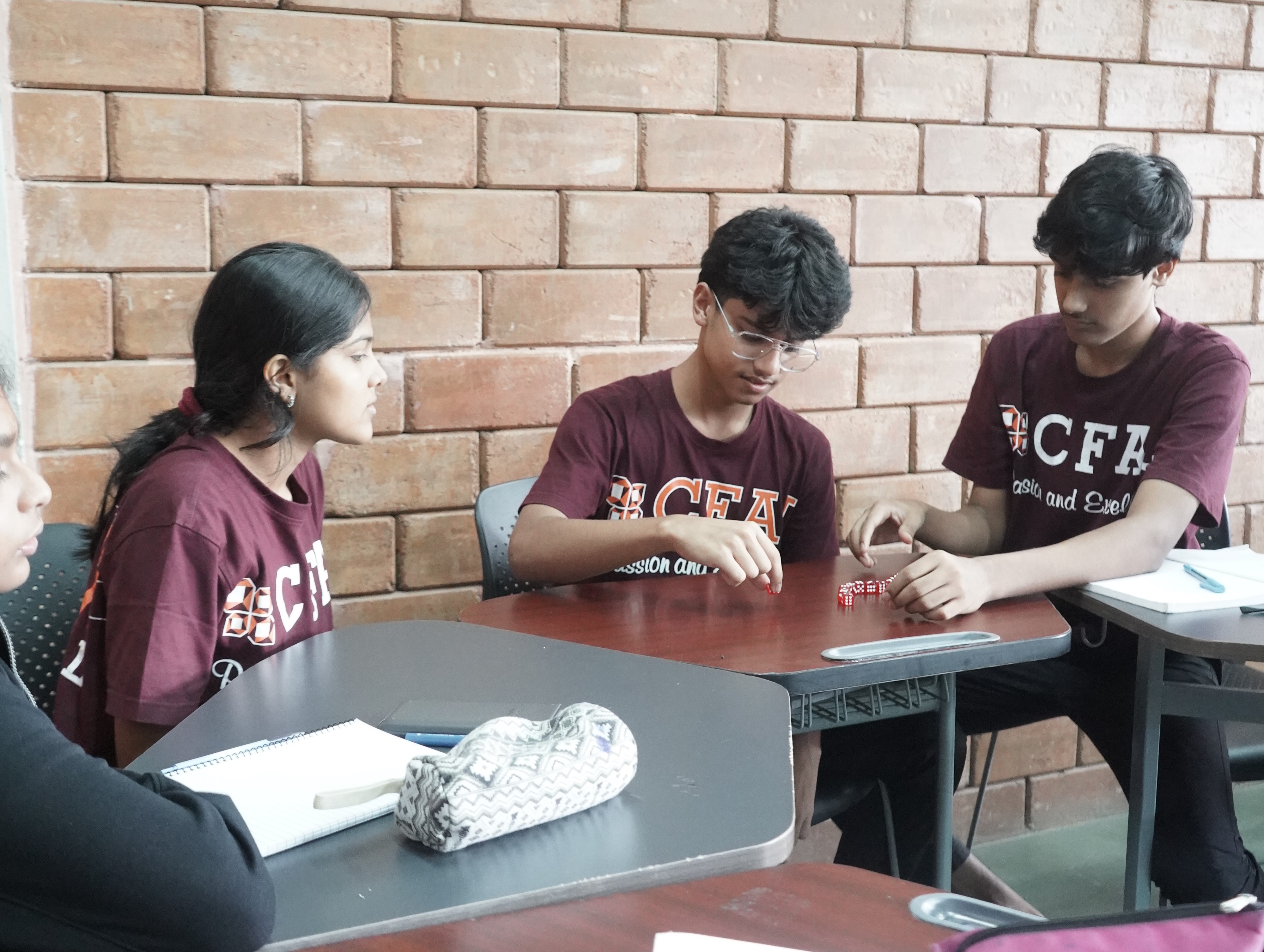
We're building the kind of person who can handle IIT — not just get into it.
A child who enters IIT at 17 needs more than academic skill. They need resilience, self-direction, the ability to handle pressure, and the character to use their abilities for good. CFAL's Foundation includes life skills, communication training, mentorship, and the TLC values: Be Your Best, Passion & Excellence, Wisdom & Compassion, Purpose & Meaning. We don't produce exam-passing machines. We raise thinkers.
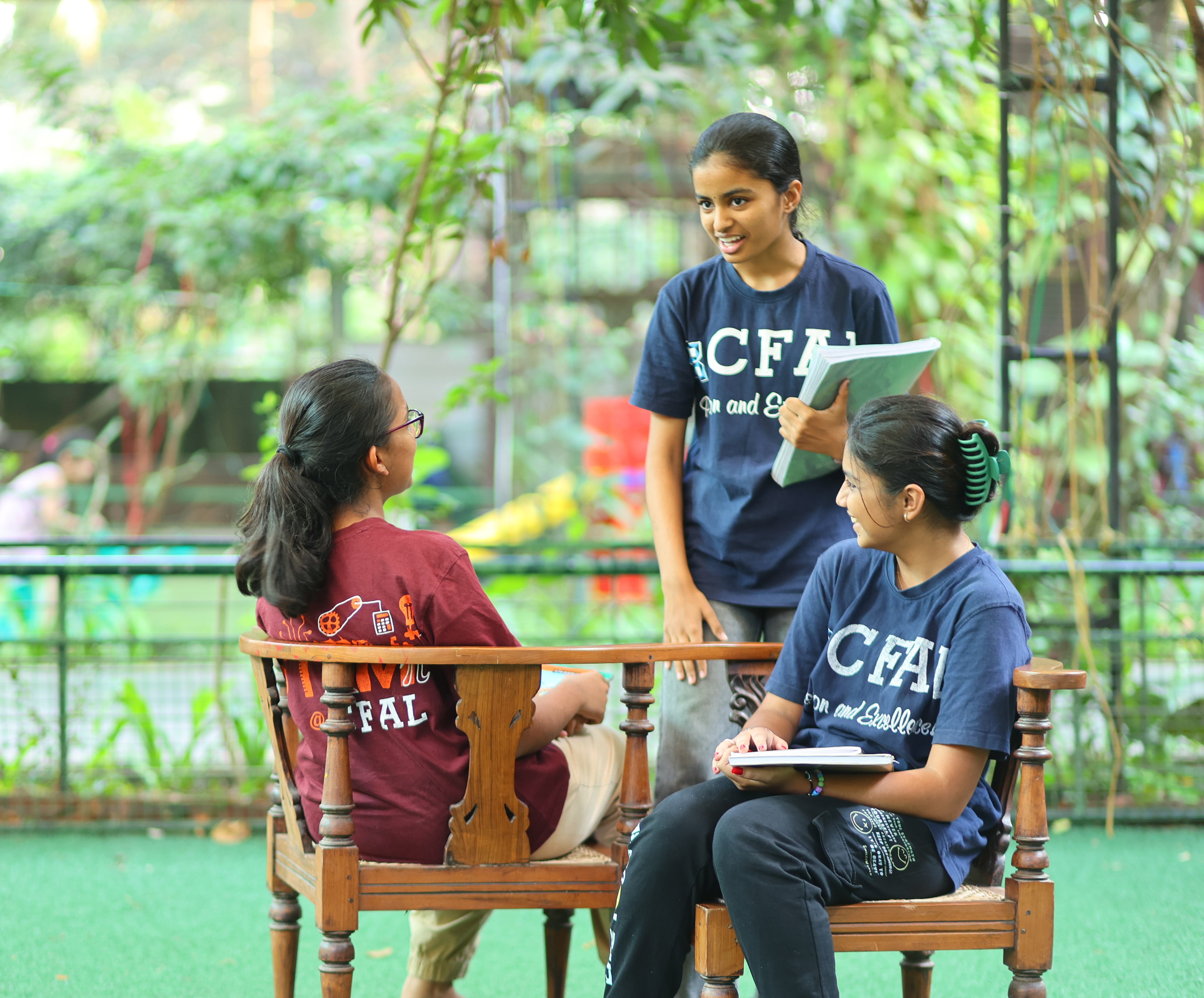

"CFAL has given my daughter a wonderful foundation in the basic subjects and the knowledge required to make the mark. What stood out is that their methods are practical and well-tested, and they refine them based on what works. Learning here is not one-way or textbook-driven. The focus is on conceptual clarity, thinking, and expression. Our child became confident, curious, and self-motivated."
Before you decide to "wait until Grade 11"
The most common thing parents say is: "We'll start competitive exam preparation in Grade 11." Here's what that means in practice:
The students who reach AIR 273. Who represent India at the Math Olympiad. Who score 700/720 in NEET. They didn't start in Grade 11. They started in Grade 7, 8, or 9. The Foundation years are not a luxury. They are the advantage.
Don't wait. The best time to plant a tree was five years ago. The second best time is now.
Let your child experience CFAL for one hour
We don't ask you to commit based on a website. Bring your child for a free assessment and a trial Math Circle session. Let them try a problem they've never seen. Watch their face when they solve it. That's all the convincing you'll need.
CFAL Foundation Programme · Grades 7–10 · Akashbhavan, Mangaluru
Campus visits every Saturday at 10 AM · Free assessment available