

Cambridge Secondary · CFAL · Grades 7 – 10
Where curiosity becomes discipline.
Not a coaching class. Not a standard school. A small, research-oriented community where students in Grades 7 through 10 develop the habits of mind that carry them to the world's best universities — and beyond.
Cambridge IGCSE
Nuffield Science
Singapore Math
Private Observatory
Math Olympiads
MakerSpace
Affiliated with Cambridge Assessment International Education · Cambridge Lower Secondary · IGCSE
A continued path,
not a new beginning.
Students who enter Grades 7 and beyond carry with them years of learning how to learn. The secondary programme does not restart — it deepens what was already set in motion.
Cambridge provides the external framework. CFAL provides the internal one — habits of inquiry, the confidence to question, the patience to sit with complexity. The two work together.
We are a small school by design. In the secondary years, this matters more than ever. Teachers know their students — not just their grades.
Grades 7 & 8
Cambridge Lower Secondary
Ages 11–13 · Foundational academic rigour
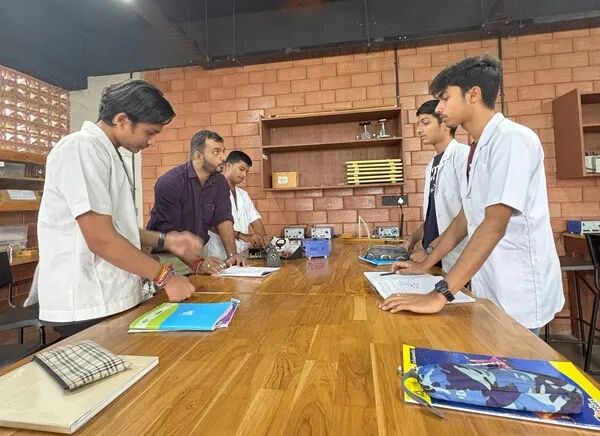
The Lower Secondary years are where subjects stop being separate boxes and start becoming different languages for describing the same world. Mathematics speaks one way; science another; history and literature a third.
Cambridge Lower Secondary sets clear goals for what students should know. Our teachers focus on the why — building conceptual understanding so students can reason through problems they have never seen before.
Krishnamurti's influence is present here. Weekly reflection sessions help students understand how they think — not just what they think.
"A student who asks 'but why does that rule work?' is worth more to us than one who gets the right answer without understanding it."
— Reflections from a secondary teacher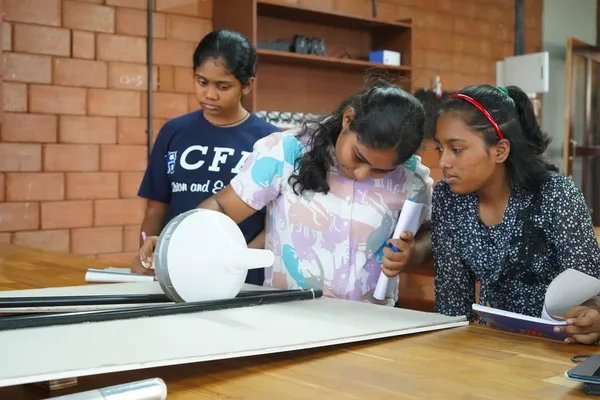
Grades 9 & 10
Cambridge IGCSE
Ages 13–15 · Internationally recognised certification
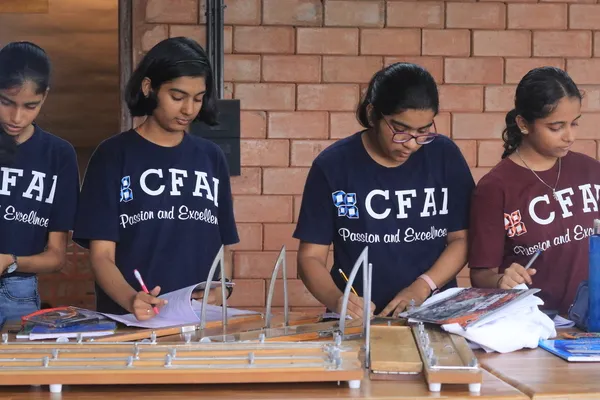
The IGCSE years are where a student's academic identity takes shape. Students select subjects that reflect their strengths and interests, study them in depth across two years, and sit for an internationally recognised Cambridge examination.
We prepare students for Cambridge examinations through deep understanding — not drilling. A student who genuinely understands a concept can answer any question about it, not only the ones they have practised.
Small class sizes mean every student has the real attention of their teacher — not just during revision season, but throughout the two years.
"Our students go into IGCSE exams knowing why they know what they know. That is a different kind of confidence."
— Reflections from an IGCSE teacher
Cambridge Lower Secondary & IGCSE
Subjects offered
Subject availability may vary by academic year.
Languages
- English Language
- English Literature
- Hindi · Second Language
Sciences
- Biology
- Chemistry
- Physics
- Combined Science
Mathematics
- Mathematics — Core & Extended
- Additional Mathematics
Humanities
- History
- Geography
- Global Perspectives
Arts & Expression
- Art & Design
- Music
- Drama
Technology
- Computer Science
- ICT
Nuffield Science · The CFAL Lab
We run the experiment
We run the experiment
before we teach the theory.
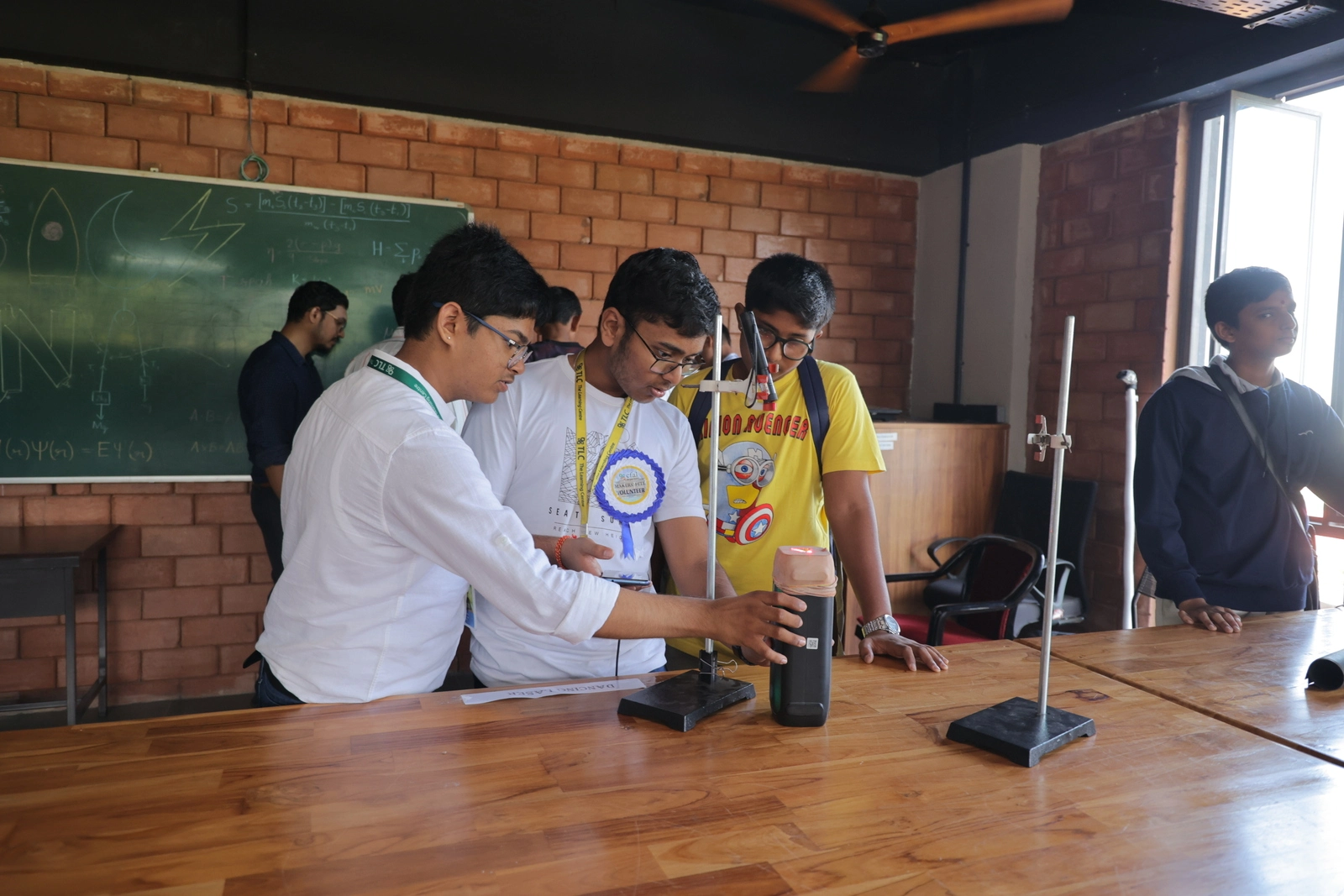
Most science education works backwards. A teacher explains a rule, then students verify it in a lab they already know the answer to. The experiment becomes a formality — and students learn to follow instructions, not to think.
At CFAL, we use the Nuffield Science methodology. Students encounter a phenomenon first — through a real experiment with an unknown outcome. They observe, discuss, and form their own explanations. Only then does the formal theory arrive. By that point, they already own the question. The answer lands differently.
This is how science actually works. Scientists do not verify what they already know — they confront what they do not understand yet. We want our students to know that feeling from the inside.
"When a student discovers that two things they thought were unrelated are actually the same thing — that moment of connection cannot be manufactured. It has to be earned."
— CFAL Science Faculty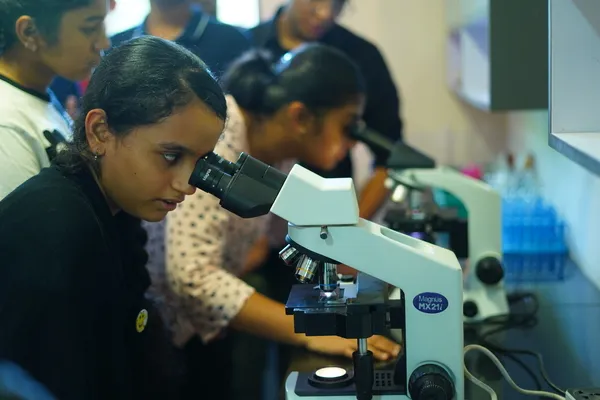
01
Observation before explanation
Students encounter the phenomenon first. They form their own hypotheses before the textbook speaks.
02
Discrepancy as the lesson
When results do not match expectations, that gap becomes the most important part of the session — not an error to be corrected.
03
Theory that is already understood
When the formal explanation arrives, students recognise it. They have already been living inside the question.
04
The habit transfers
Students who learn this way begin to approach every problem — in mathematics, in history, in life — by asking what they can observe before they reach for an answer.
Math Circle · The Ramanujan Contest · Math Camps
Mathematics is not a subject.
Mathematics is not a subject.
It is a way of seeing.
The most important thing that can happen to a student in mathematics is not learning a formula. It is sitting with a problem they do not know how to solve — and staying with it until something breaks open.
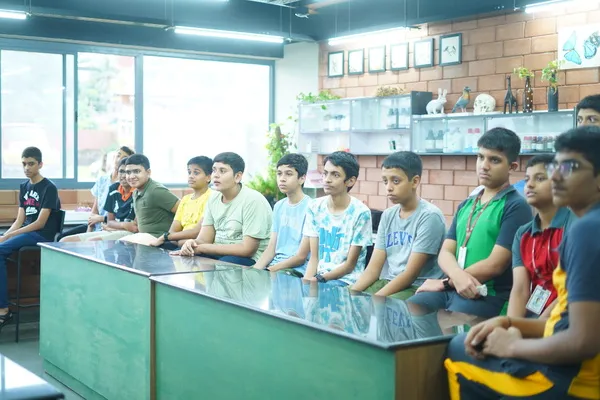
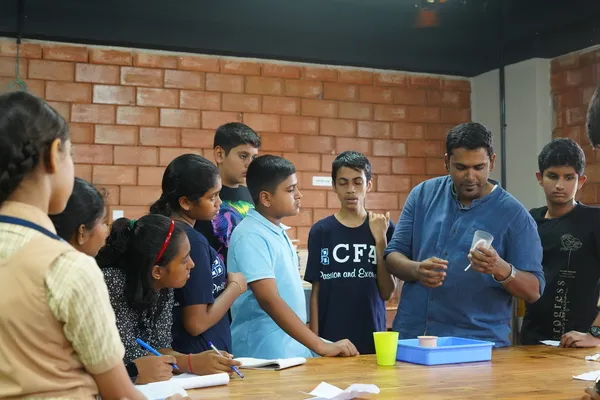
The Math Circle exists for exactly that. Every week, students gather around problems that no lesson has prepared them for. They are not given hints. They are given time. The problems are beautiful, strange, and genuinely open. The goal is not the answer — it is the quality of thinking the problem forces out.
Led by research mathematicians — including Prof. P. N. Subramanya and Dr. Srikanth Pai — the Math Circle models what mathematical life actually looks like: slow, collaborative, and punctuated by surprise.
Ramanujan Contest
Ten months. One consistent pursuit.
Unlike one-off exams, the Ramanujan Contest runs across ten monthly tests — rewarding grit and steady growth over flash performance. It identifies students who can sustain attention on hard problems, not just solve them quickly.
Math Camps
Three times a year. Deep-dive stamina.
Multi-day immersions that build the problem-solving endurance required for the Regional Mathematical Olympiad (RMO) and INMO. Students who attend these camps learn that a problem that takes three days to solve is worth more than ten problems solved in an hour.
Beyond the syllabus · real-world capability
Why we go further than IGCSE requires.
A Cambridge certificate opens doors. What a student can actually do when they walk through those doors is a different question entirely. We invest in both.
MakerSpace · Design & Engineering
Building things that do not exist yet.
The MakerSpace gives students access to 3D printers, laser cutters, robotics platforms, and electronics equipment. The question it asks every student is simple: can you make something that solves a real problem? Not a school problem. A real one.
- Design-to-prototype cycle from Grade 7
- Robotics and programmed systems
- Instruments built for actual science experiments
- Preparation for global competitions including ISEF
Observatory · Space Science
Doing astronomy, not just studying it.
The CFAL observatory is student-run. Students learn to set up a professional-grade telescope, capture deep-sky images, process raw data, and share findings under a Creative Commons licence. They are not tourists of science — they are its practitioners.
- Professional telescope and camera equipment
- Astrophotography of nebulae, planets, the Moon
- Student-managed Observatory Wiki
- NSEA → IOAA Olympiad pipeline
Olympiad Exposure · AMC · NMTC · RMO
Competing with the best — not the class.
CFAL students enter national and international competitions from Grade 7 onwards. This is not about winning. It is about encountering problems that expand what a student believes is possible for them — and meeting peers who take ideas as seriously as they do.
- American Mathematics Competitions from Grade 7
- National Mathematics Talent Contest
- RMO and INMO preparation tracks
- National Standard Examinations across sciences
Four foundations · unchanged through every stage
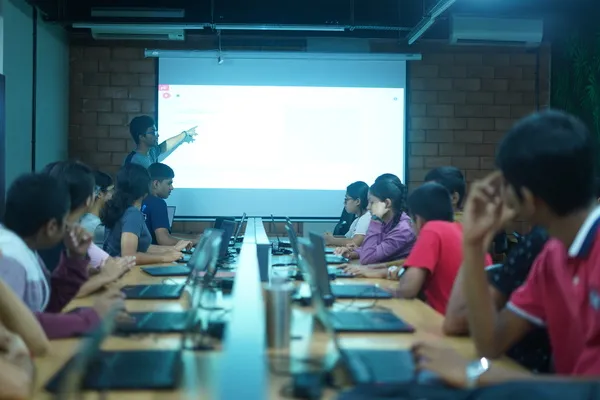
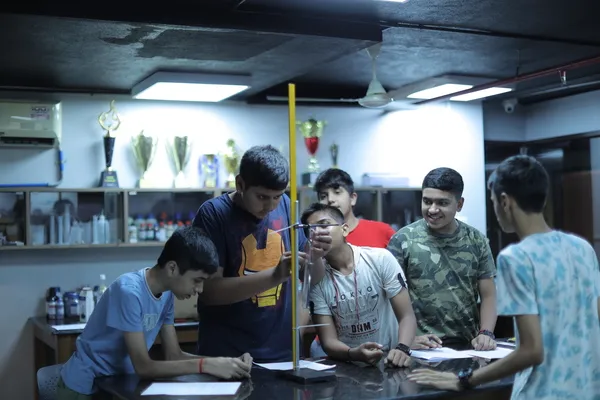
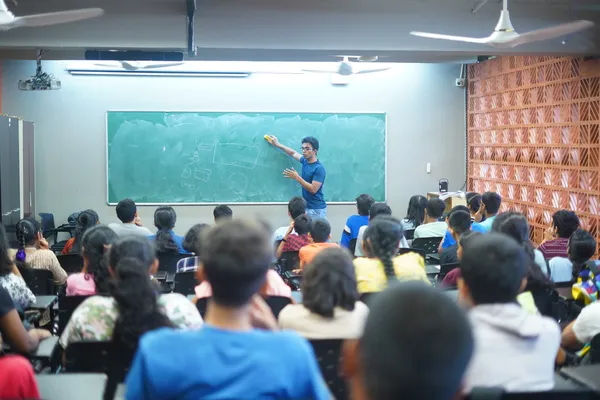
The same roots, grown deeper.
Montessori
Self-directed learning and deep concentration, built in the early years, become the essential habits of secondary study.
Krishnamurti
Self-inquiry becomes a living practice. Students learn to question their own assumptions alongside the ideas in their textbooks.
Science & Reason
Rational thinking, hypothesis, falsifiability — applied not just in science class, but as a posture toward every subject.
Nature
Field study and ecological observation continue alongside Cambridge requirements. The Western Ghats remain a living classroom.
"The highest function of education is to bring about an integrated individual who is capable of dealing with life as a whole."Jiddu Krishnamurti
After Grade 10 · two paths, one family
The journey continues.
Students completing their IGCSE are well-placed for two paths within the same institutional family — each sharing the same philosophical foundations.
Admissions
Talk to us about Grades 7 – 10.
A conversation before an application is not just welcome — it is encouraged. We want families to fully understand what this programme is, and what it is not.
CFAL · Centre for Advanced Learning · Mangaluru · admissions@cfalindia.com · cfalindia.com